Project Participation
April 2023 - April 2025
About the Project:
 The Programa de Ciencias Mariñas de Galicia, which is the Spanish research project funded with the European NextGenerationEU funding. (Marine Sciences Program of Galicia) is part of the ThinkInAzul project.
Thininazul logo
Recognized for its complexity, sustainability science requires interdisciplinary and ambitious research approaches. This complexity underlines the need for research that balances breadth with the pursuit of concrete and demonstrable impacts beyond the generation of new scientific knowledge. Galicia, with its extensive 1400 km coastline, unique estuaries and diverse ecosystems, coupled with a high population density and a marine-dependent economic and social structure, provides an ideal context for such marine research initiatives.
In the face of global change, it is crucial for the scientific community to intensify efforts to understand the state of the environment and marine resources, identify vulnerable areas, predict future scenarios - especially those involving global change - and develop measures to ensure sustainable exploitation of commercially important species, marine ecosystems, biodiversity conservation, protection of vulnerable ecosystems and the overall health of the marine environment. The resilience of the marine environment and society, as well as societal well-being and health, depend to a large extent on progress in these areas. This defines the strategic focus of the Marine Sciences Program in Galicia.
Role in Project
Work package 3 of the marine science program aims at adapting new analytical and optical technologies (among others) for the study of plankton communities, in order to analyze the state of these communities to measure the state of environmental quality. To this end, our working group performs plankton sampling tasks together with other Essential Oceanographic Variables (EOVs). We have also implemented new technologies for the characterization of plankton through image analysis (Cytosense and Planktoscope). My tasks in this project consist of adapting and updating the database to house all these new data, together with other data generated in the framework of the Programa de Ciencias Mariñas, as well as analyzing them for technical reports and scientific articles.
To this end, we are in the process of expanding, remodeling and migrating the database to the servers of the Centro de Supercomputación de Galicia, which improves its access and scalability, and improves the capacity of interaction with other databases of the project and other external ones.
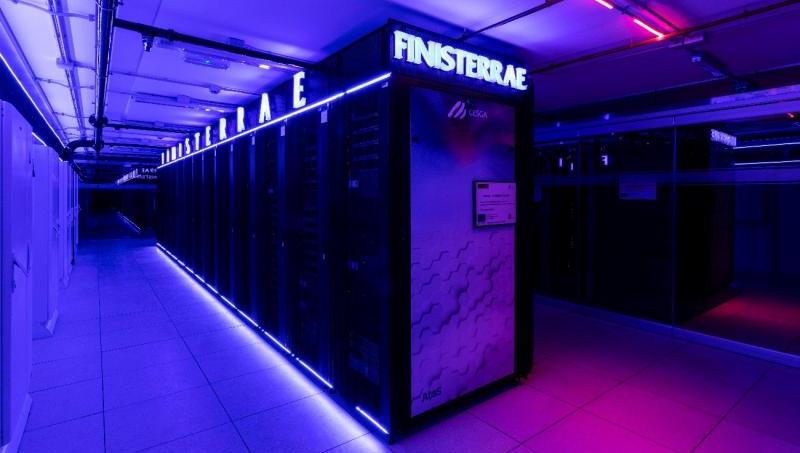
The Finisterrae supercomputer, where the database is hosted
My Contribution
I participated in Activity A3.3, “Operational Plankton Ecology,” as a member of the Harmful Microalgae and Plankton Ecology (VGOHAB) group at the Vigo Oceanographic Center.
My work focused on adapting and maintaining VGOHAdB to integrate plankton observations and environmental variables, facilitating their joint consultation and analysis.
- Design and administration of the PostgreSQL database running on Linux
- Development of protocols for data management, editing, and analysis using R
- Development of Shiny applications for data querying and visualization
- Implementation of statistical and time-series analyses
Connection to Long-Term Observations
This work supported and contributed to the research on the RADIALES-Vigo oceanographic and plankton time series. The integration of historical data and new observations allows for the study of the variability of plankton communities and their relationship to environmental conditions.